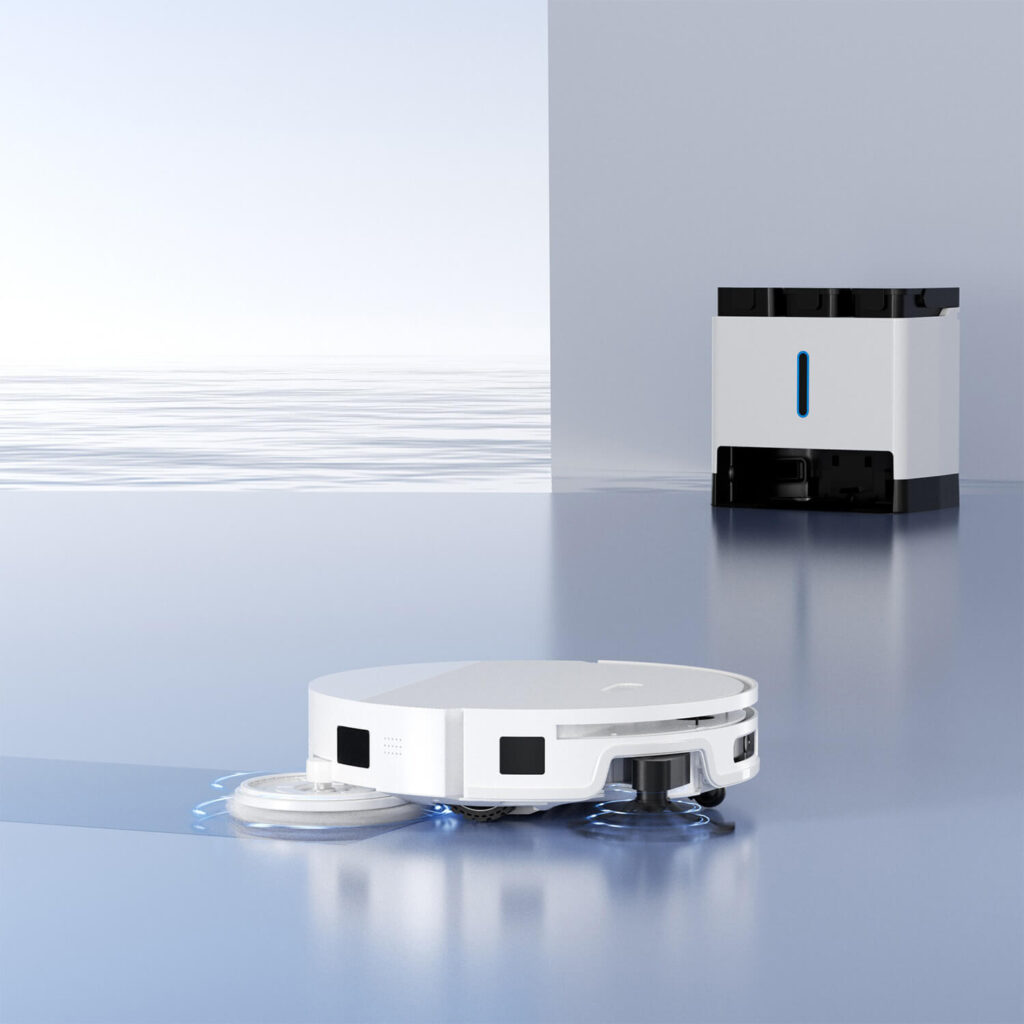
Your in-house cleaning team may cost less annually and deliver higher efficiency than these so-called “hi-tech toys”.
When sales reps show you that commercial cleaning robot with automatic path planning, claiming it can replace three cleaners, they won’t tell you that over 60% of commercial cleaning robots end up as “lobby decorations” within the first year of purchase. What they’ll never disclose is that many property management companies buy these robots purely for “tech image”, while still relying on traditional manual labor for actual cleaning tasks.

The Real Market Landscape of Commercial Cleaning Robots
The Extreme Contrast Between Capital Frenzy and Market Downturn
Between 2023 and 2025, the commercial cleaning robot track experienced a drastic shift from frenzy to rationality. The global robotic vacuum cleaner market size reached approximately $6.085 billion in 2025, yet the share of the commercial segment remains negligible.
Half a year ago, this industry was “unbelievably hot”. Companies competed fiercely to poach talent by offering salaries 30% above the industry average. A typical SLAM algorithm engineer with a master’s degree and three years of experience could command an annual salary of 700,000 yuan plus 300,000 yuan in stock options. However, this boom vanished in less than six months. Instead, major manufacturers began downsizing their workforce; one leading commercial cleaning robot company even cut its staff size by half.
Behind this contrast between capital heat and market coldness lies the brutal collision between commercial reality and technological limitations. There is a huge gap between the “disruptive innovation” hyped by suppliers and the actual experience of customers.
The Truth About Commercial Cleaning Robot Performance
Most commercial cleaning robots available today can only handle standard flooring and small-sized debris. They are basically unable to remove sticky substances (e.g., chewing gum) or slightly larger items (e.g., aluminum cans)—which happen to be the most common cleaning challenges in real commercial scenarios.
Even more concerning is that cleaning robots often require manual intervention and additional training costs in practical use. The fully automated scenarios showcased in sales demos are rarely realized in reality.
Five Major Traps in B2B Procurement Decisions and Corresponding Strategies
Trap 1: Exaggerated “Labor Replacement” Economics
Salespeople often crunch the numbers like this: A cleaner’s annual salary is 48,000 yuan, and a robot costs 100,000 yuan—so the investment can be recovered in over two years, and then the robot starts “making money”. However, this calculation has two fatal flaws:
- Ignoring robot limitations and additional costs: Robots cannot handle 3D cleaning scenarios (e.g., staircases, restrooms) and require dedicated personnel for management and maintenance.
- Underestimating human flexibility and adaptability: Cleaners can handle multiple cleaning tasks simultaneously, while robots have single-function limitations.
Corresponding Strategy: Conduct small-scale pilot tests in real scenarios, record the total cost of ownership (including maintenance, training, and manual supervision costs) over three months, and then make a procurement decision.
Trap 2: Prioritizing Channel Relationships Over Actual Product Performance
In the commercial cleaning robot industry, “the water in B2B business is deeper than the Mariana Trench”. Sometimes, product performance is not the key factor for winning bids—channel relationships may be more important.
Corresponding Strategy:
- Establish a cross-departmental procurement committee to reduce single-point decision-making risks.
- Require suppliers to provide third-party verification reports.
- Conduct on-site visits to clients who have purchased the same equipment to learn about real usage situations.
Trap 3: Disconnect Between Technical Parameters and Actual Scenarios
Peng Hui, an entrepreneur, once spent a month researching the market and refining his product based on feedback from cleaners and lobby managers. However, when he presented the product to property managers, he found that “cleaning services had already been outsourced”, and the cleaning companies had signed exclusive agreements with large-scale cleaning equipment manufacturers.
Corresponding Strategy: Before procurement, it is essential to clearly understand the internal cleaning business management structure and existing contract terms of the enterprise to avoid misalignment between the product and actual conditions.
Trap 4: Ignoring the Existing Cleaning Equipment Ecosystem
Established traditional cleaning equipment manufacturers such as Kärcher, Tennant, and Nilfisk have decades of industry experience and signed long-term agreements with clients, which may include exclusive clauses. This means that even if new cleaning robots are purchased, they may not be fully utilized due to these exclusive agreements.
Corresponding Strategy: Review the exclusive clauses in existing cleaning equipment contracts before procurement to ensure that new equipment can be seamlessly integrated into the existing cleaning system.
Trap 5: Underestimating Operational Complexity
Commercial cleaning robots require regular maintenance, software updates, and dedicated management. These hidden costs are often underestimated during procurement.
Corresponding Strategy: Require suppliers to provide detailed operation and maintenance cost lists and service level agreements (SLAs), and incorporate them into the total cost calculation.
Robot Suitability Assessment for Different Commercial Scenarios
The table below analyzes the actual application value of cleaning robots in different commercial environments:
| Scenario Type | Cleaning Demand Characteristics | Robot Suitability | Key Considerations |
|---|---|---|---|
| High-end office building lobbies | Clean flooring dominated by dust; strong emphasis on corporate image | Medium | Appearance design and noise control are more important than cleaning capability |
| Science and technology parks | High foot traffic; diverse waste types; open spaces | High | Battery life and obstacle recognition accuracy are critical |
| Manufacturing workshops | High dust concentration; complex environments; high durability requirements | Low | Dust and water resistance rating, anti-collision capability are key |
| Retail venues | Fluctuating foot traffic; frequently changing displays; diverse waste types | Medium | Navigation system’s ability to adapt to dynamic environments |
Value-Optimized Procurement Decision-Making Framework
Step 1: Precision Demand Analysis
Ignore those “nice-to-have” functions and focus on solving core cleaning pain points. Ask yourself three questions:
- What is my current biggest cleaning cost? (Labor cost, equipment maintenance, or substandard cleaning results?)
- Which specific problem can the robot solve? (Reducing nighttime cleaning labor? Increasing daily cleaning frequency in lobbies?)
- How to calculate the input-output ratio? (Including equipment depreciation, operation and maintenance costs, and labor cost savings)
Step 2: Supplier Evaluation System
Don’t be misled by brand prestige—establish your own evaluation system:
- Technical reliability: Require at least two weeks of testing in real environments, not just demo hall displays.
- Service network: Understand the density of the supplier’s service outlets and response time in your city.
- Update policy: Clarify the frequency of software updates and whether additional fees apply.
- Exit mechanism: Ensure the contract includes an exit clause if performance fails to meet standards.
Step 3: Negotiation and Contract Key Points
The essence of B2B procurement is investment, not consumption. Negotiations should focus on value rather than price:
- Phased payment: Make payments in installments based on milestones such as delivery, installation, acceptance, and stable operation.
- Performance guarantee: Clearly specify key performance indicators (e.g., cleaning efficiency, uptime) in the contract.
- Data rights: Clarify the ownership and usage rights of cleaning data.
Step 4: Pilot Implementation Strategy
Successful procurement decisions start with small-scale pilots:
- Select representative areas for a 1–3 month pilot program.
- Establish an evaluation index system, including cleaning efficiency, manual intervention frequency, and operation and maintenance costs.
- Collect feedback from end users (cleaners, lobby managers, etc.).
- Calculate actual ROI instead of relying on theoretical values provided by sales reps.
Future Trends: Procurement Strategies to Avoid Premature Obsolescence
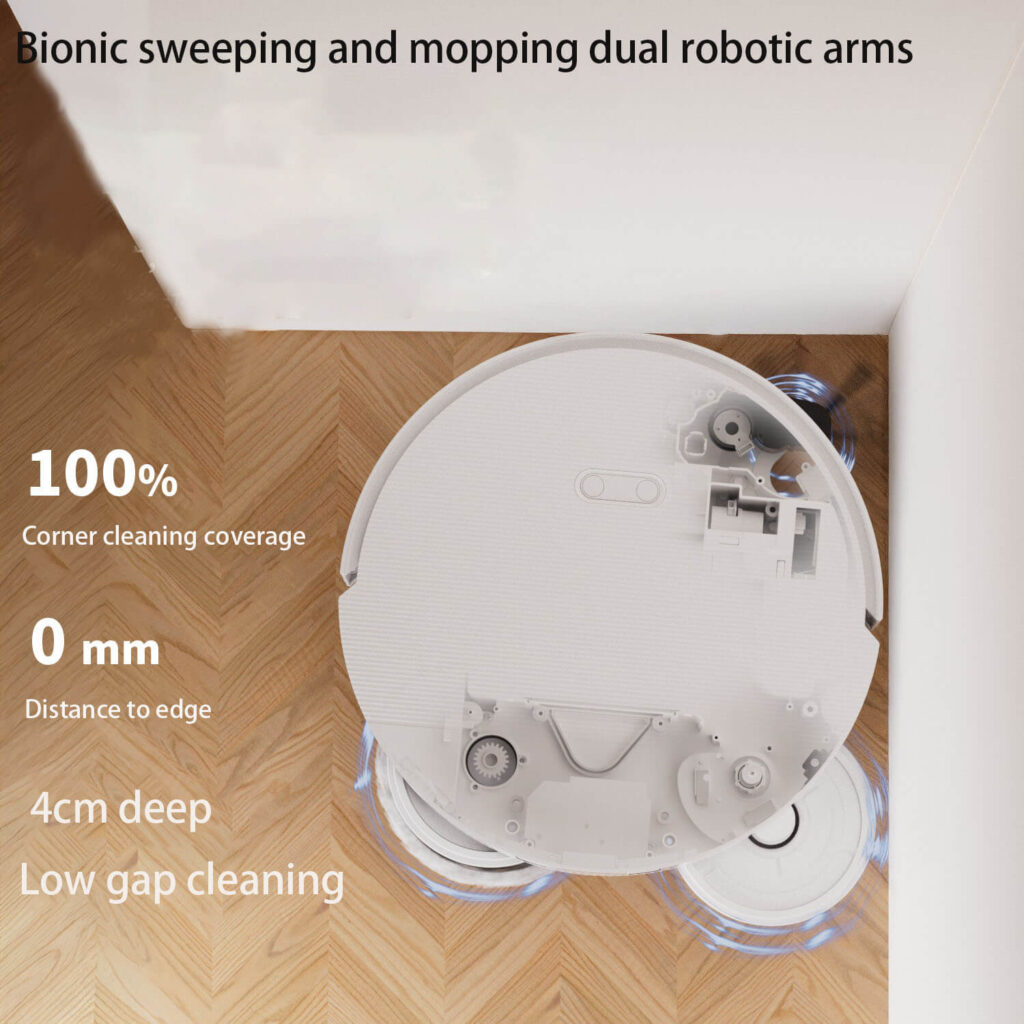
The direction of technological iteration is clear: AI visual recognition and 3D mapping technologies are becoming widespread, improving path planning and obstacle avoidance accuracy. Differentiated functions such as voice control and robotic arms (for corner cleaning) have become key competitive focal points.
By 2025, robotic vacuum cleaners will accelerate their evolution towards “predictive services”. Relying on digital twins, edge AI, and large model miniaturization, they will realize active cleaning planning based on work rhythms.
Procurement Strategy: Choose equipment with modular design and support for over-the-air (OTA) software updates to ensure it will not become obsolete due to technological iteration within 2–3 years.
Frequently Asked Questions (FAQ) About Bulk Procurement
These questions directly address the deepest concerns of B2B procurement managers and provide fact-based answers to further enhance the authority and persuasiveness of this article.
Q1: Compared with traditional manual cleaning or single-function equipment, how to calculate the real ROI of bulk deploying cleaning robots?
Core Answer: The true ROI goes far beyond the simple “equipment vs. labor” comparison. The total cost of ownership (TCO) framework should be adopted for calculation, with key indicators including:
- Direct cost savings: Reduce reliance on increasingly expensive and mobile labor, avoiding labor fluctuation and management costs.
- Efficiency improvement value: Robots can work continuously for long hours with stable cleaning efficiency. For example, some models can clean thousands of square meters per hour and achieve data-driven management and full-process transparent control to support decision-making.
- Hidden cost reduction: Standardized cleaning output improves venue image and user experience; data reports help optimize energy consumption and consumable procurement.
- Payback period: Usually 1–3 years, depending heavily on actual scenarios, cleaning standards, and the functional configuration of the selected model.
Q2: In complex and dynamic commercial environments (e.g., high-traffic shopping malls), how reliable are the navigation and obstacle avoidance capabilities of robots?
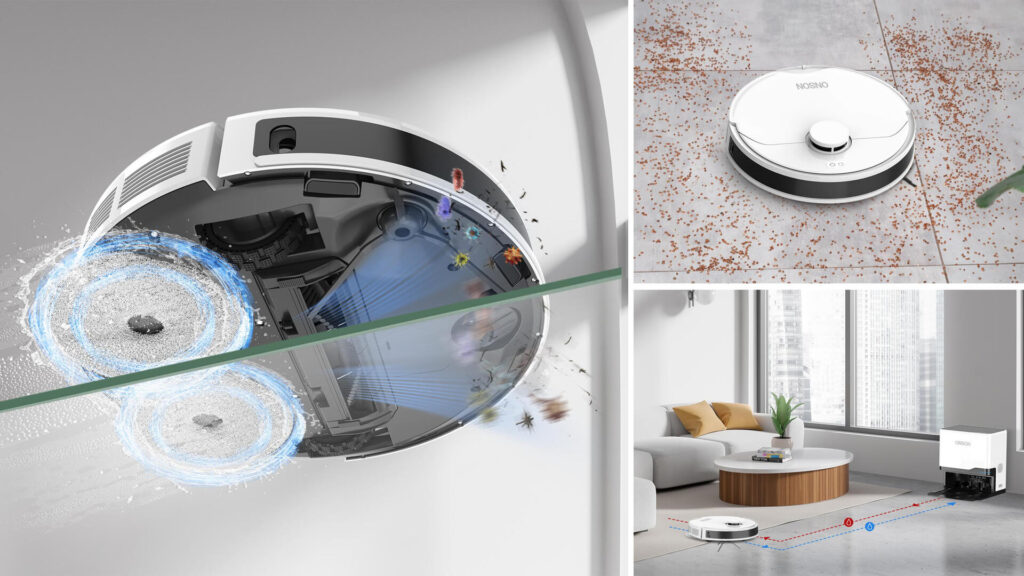
Core Answer: Currently, mainstream enterprise-grade products adopt multi-sensor fusion technology (e.g., lidar, depth cameras, ultrasonic sensors) combined with AI algorithms to achieve 360° environmental perception. They can respond to obstacles within 20 milliseconds, effectively avoiding randomly appearing pedestrians, trolleys, etc. For fully automated operations during nighttime or non-business hours, their path planning and coverage capabilities are already very mature and reliable.
Q3: Can one robot replace multiple traditional cleaning equipment (sweeping, washing, mopping, disinfection)? Is modular design a “real demand” or a “false concept”?
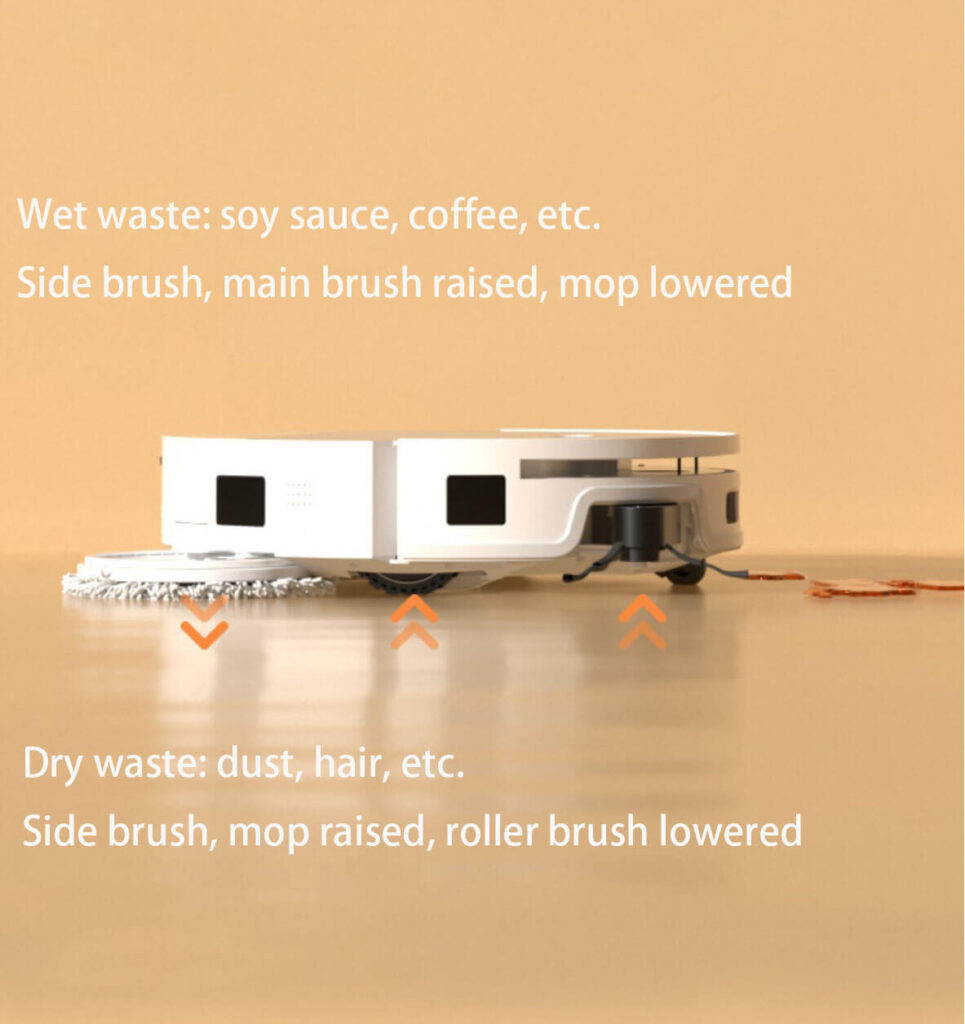
Core Answer: Multi-functionality in one device is a clear trend and real value proposition for commercial cleaning robots. High-end models can already integrate multiple functions such as sweeping, vacuuming, floor washing, dust pushing, and disinfection. The significance of modular design lies in:
- Reducing total cost: Lower equipment investment and management costs, with one device handling multiple cleaning tasks.
- Enhancing flexibility: Quickly switch working modes according to cleaning needs in different time periods and areas without replacing equipment.
- Facilitating maintenance: Cleaning components adopt quick-release structures for convenient daily cleaning and consumable replacement.
Q4: After bulk procurement, how to ensure operation and maintenance costs (consumables, repairs) and after-sales services (response time, technical support)?
Core Answer: This is a key factor in evaluating suppliers. Before procurement, it is essential to clarify:
- Warranty policy: Understand the warranty scope and duration of core components, and whether consumables (e.g., brush discs, filters) are included.
- Service Level Agreement (SLA): Specify fault response time (e.g., 7×24-hour support), whether backup equipment services are provided (to ensure uninterrupted business operations), and the scope and timeliness of on-site engineer services.
- Consumable cost and lifespan: Require suppliers to provide the expected replacement cycle and unit price of key consumables to accurately estimate annual operation and maintenance budgets.
Q5: How to ensure that robots can adapt to our specific floor materials and spatial layouts (e.g., narrow aisles, office areas with dense desks and chairs)?
Core Answer: Pre-purchase on-site testing is crucial. During the selection process, require suppliers to provide:
- On-site proof of concept: Conduct tests in your actual scenario for at least several days to verify passability, cleaning effectiveness, and adaptability to specific floor materials (e.g., marble, carpets, epoxy flooring).
- Key parameter verification: Focus on product thickness and narrow aisle pass width (e.g., 550mm ultra-thin body, 750mm narrow aisle passability), as well as edge cleaning functions (to ensure zero dead corners). These data must meet your on-site conditions.
Conclusion: Making a Procurement Decision You Won’t Regret
In the commercial cleaning robot field, the most expensive is not necessarily the best—the one that best fits your business scenario is the value-optimized choice. Under current technical conditions, cleaning robots are more suitable as a supplement to manual cleaning rather than a replacement.
If you are considering purchasing commercial cleaning robots, remember this: A truly successful procurement is not the moment you sign the contract, but when the equipment continues to create value for you three years later.
Starting now, establish your procurement evaluation framework, conduct small-scale pilots, and guide your decisions with data and facts rather than sales promises. This is the only way for B2B procurement managers to avoid being ripped off by “hi-tech toys”.
Which application scenario of commercial cleaning robots are you most interested in? We can further discuss the detailed evaluation framework and implementation strategy for specific scenarios.