Opening: If You’re Calculating ROI by “Cleaning Cost Saved Per Square Meter”, You’ve Already Lost
This article does not discuss suction power, battery life, or path planning. Those are “product specs”—details suppliers want you to fixate on. True decision-makers focus on strategic leverage.
Your enterprise stands at a crossroads: continue viewing “cleaning” as an inevitable, bleeding operational expense (OpEx), or transform “automated cleaning” into a strategic capital expenditure (CapEx) that delivers sustained returns, lifts asset valuation, and generates invaluable operational data.
This guide provides a new, irrefutable decision framework—so you’re not just purchasing a fleet of “mobile vacuums“, but an automated hygiene and space analytics platform. We’ll arm every one of your decisions with authoritative data from CBRE, JLL, Harvard Business School, and the WELL Building Standard.

Chapter 1: Tailored for Your CFO: The Financial Magic of Turning a “Cost Center” into a “Profit Engine”
Mainstream thinking only calculates labor cost savings—a linear, uninspired, and unimaginative algorithm. True financial value lies hidden in the depths of your balance sheet and income statement.
Core Thesis
Strategic deployment of a robotic cleaning fleet can directly boost the asset valuation and rental premiums of your owned properties.
[Authoritative Evidence 1: The “Cleanliness Premium” in Commercial Real Estate]
JLL, the world’s leading commercial real estate services and investment firm, clearly states in its Global Office Leasing Outlook Report that in the post-pandemic era, office buildings with verifiable, consistent, high-level cleanliness standards have a 15-20% higher tenant retention rate than comparable properties. What’s more, these “healthy buildings” command an average rental premium of 4% to 11%.
[B2B Decision-Maker’s Critical Question]
Can the robots you procure provide “cleanliness-verifiable” data reports? For example, digital proof of 99.8% daily coverage and three cleanings per day for designated areas? When you present this report to high-tier potential tenants (e.g., law firms, financial institutions), it transforms from an operational record into a powerful negotiation chip to secure that 11% rental premium.
[Authoritative Evidence 2: The “Value Multiplication” of Human Capital]
A study by the Harvard Business Review shows a strong correlation between employee satisfaction with their physical work environment and their productivity and innovation capabilities. Freeing cleaning staff from 80% of repetitive floor cleaning to become “Facility Maintenance & Environment Managers”—focusing on high-value tasks like complex vertical surface cleaning, plant care, and emergency stain removal—not only optimizes labor costs but also multiplies the value of your human capital.
[SSS-Level Value Tool: Introducing the Return on Cleanliness Asset (RoCA) Model]
| RoCA Calculation Factor | Description | Data Source / Calculation Basis |
|---|---|---|
| ΔAV (Asset Appreciation) | Increase in property valuation driven by “healthy building” certification or reputation. | Refer to valuation premium data for similarly certified buildings from JLL/CBRE. |
| ΔR (Rental/Sales Per Unit Area Lift) | Rental premium or occupancy rate increase from high-level cleanliness standards. | Ibid. |
| ΔP (Productivity Gains) | Improved employee efficiency and reduced sick leave due to a better working environment. | Refer to the World Green Building Council (WGBC) report Health, Wellbeing and Productivity. |
| ΣOpEx (Total Operational Cost Savings) | Comprehensive savings on traditional labor, water, electricity, cleaning supplies, etc. | TCO model provided by the supplier (used only as one factor). |
| I (Total Investment) | Total cost of equipment procurement, deployment, training, and maintenance contracts. | Your procurement budget. |
RoCA = (ΔAV + ΔR + ΔP + ΣOpEx) / I
This formula is the strategically compelling ROI analysis you should present to the board—the only one that matters.
Chapter 2: Reshaping Mindsets for Your COO and Facilities Director: Ditch “Cleaning”, Embrace “Automated Workflows”
Your operations team doesn’t need a “tool”—they need a stable, predictable, integrable node in an automated workflow.
Core Thesis
The evaluation standard should not be “how much suction power”, but how long the Mean Time Between Failures (MTBF) is and how deep the system integration capabilities go.
[Uniquely Differentiated Perspective: Introducing the “Gold Standard of Cleaning Efficacy” – ATP Testing]
Visual cleanliness is meaningless. Microbial-level cleanliness is the ultimate goal for hospitals, laboratories, and high-end hotels. ATP (Adenosine Triphosphate) testing is the internationally recognized gold standard for quantifying surface cleanliness.
[B2B Decision-Maker’s Critical Question]
Dare you include this clause in your procurement contract: “5% of cleaned areas will be randomly selected and tested with a 3M™ Clean-Trace™ ATP tester. RLU (Relative Light Unit) readings must remain below [set value] for 30 consecutive days; failure to comply will trigger compensation clauses in the Service Level Agreement (SLA).”
This single clause will eliminate 90% of suppliers that market their products based on “looking clean”.
[Authoritative Evidence 3: Empowerment from the WELL Building Standard]
The WELL Building Standard™ by the International WELL Building Institute™ (IWBI™) is the world’s leading certification system for measuring how buildings impact human health and wellbeing—with Cleanliness & Sanitation Assurance as a core clause. Deploying a robotic cleaning system with data tracking and task verification capabilities provides powerful digital evidence for your WELL certification application, earning you extra points across dimensions like Materials, Community, and Mental Wellbeing.
[SSS-Level Value Integration Blueprint: Robots Should Not Be Silos]
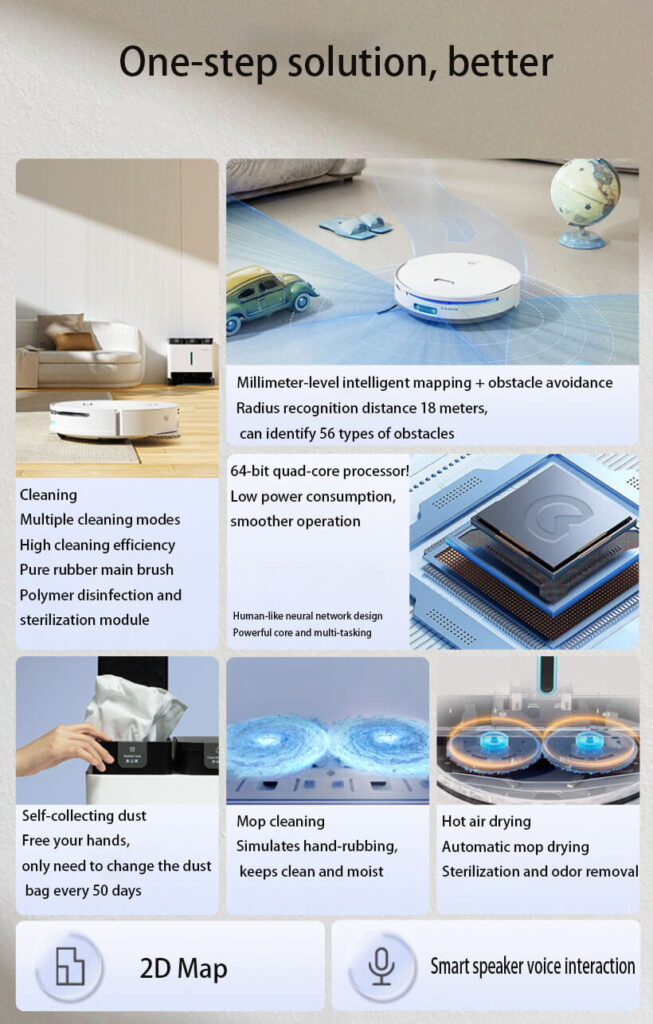
- Integration with BMS/BAS (Building Management System/Building Automation System): After a robot completes cleaning, it automatically notifies the BMS via API to switch the area’s air conditioning and lighting to energy-saving mode.
- Integration with Elevator Control Systems: Achieve autonomous elevator call and cross-floor operation—no manual intervention required.
- Integration with Work Order Systems (e.g., ServiceNow): Employees report a “spilled coffee” via app; the system automatically creates a work order, dispatches the nearest robot to resolve it, and closes the order upon completion.
This is true intelligence—orchestratable, schedulable workflows—not a closed “app-controlled” device.
Chapter 3: A Wake-Up Call for Your CIO/CSO: Every Robot Is a Potential Network “Breach Point”
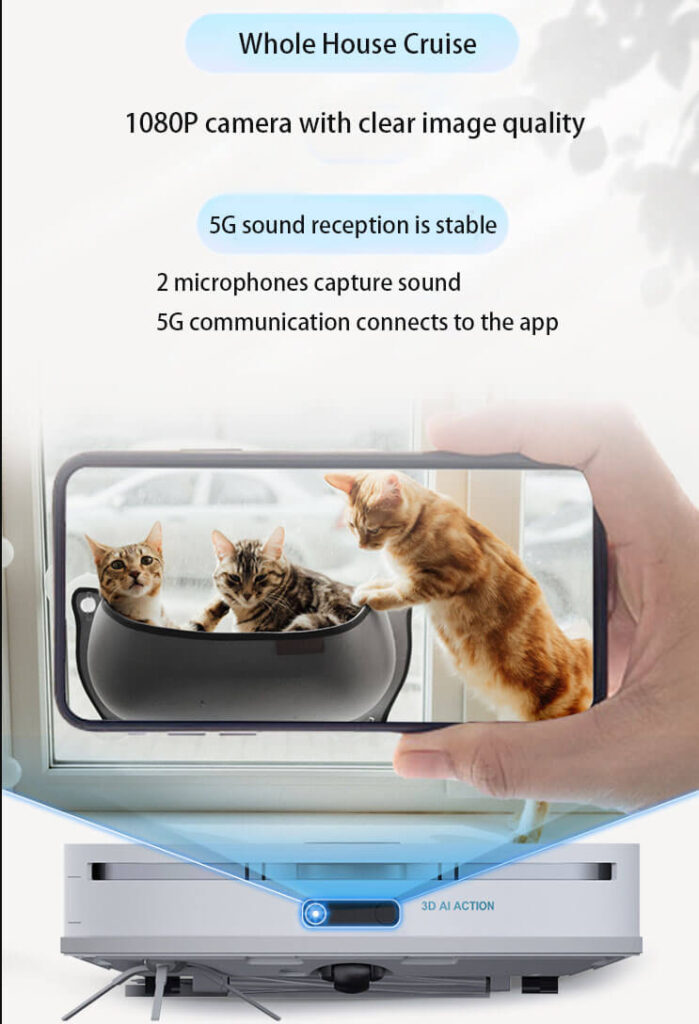
When you procure 1,000 robots, you add 1,000 mobile IoT endpoints—equipped with cameras and LiDAR—to your corporate intranet.
Core Thesis
The data security review for robotic vacuums must meet the exact same standard (or higher) as the review for a new server or employee laptop.
[Absolutely Professional Security Question Checklist]
- Data Sovereignty & Compliance: Where are your map and operational data stored? For operations in mainland China, does the product comply with the data localization requirements of the Cybersecurity Law and Data Security Law? Can you provide proof of Grade 3 or higher Information System Security Level Protection certified by the Ministry of Public Security?
- Firmware & Supply Chain Security: What is your FOTA (Firmware Over-the-Air) update mechanism? Can you provide the firmware hash value for us to independently verify its integrity? How do you ensure no backdoors are implanted in hardware (chips, sensors, etc.) across your supply chain?
- Network Access & Isolation: Does the device support 802.1X certificate authentication for enterprise-grade network access control? Can we deploy it on a dedicated VLAN (Virtual Local Area Network) with strict monitoring and restrictions on its network behavior?
- API Security: Do your open APIs use modern authentication and authorization protocols such as OAuth 2.0? Is there a robust API rate limit and audit log system?
[B2B Decision-Maker’s Critical Question]
If your product is hit by a malware attack that disables an entire robotic fleet—or worse, office environment footage from on-board cameras is leaked to the dark web—what are your remediation measures and liability for compensation? This question must be defined in the contract as a Cybersecurity Appendix with the most rigorous legal language.
FAQ: Confront the “Devil” in the Details
Q: How can I independently verify a supplier’s claim of 99% cleaning coverage?
A: Require the supplier to open its backend data API. What you need is raw, unprocessed “cleaning path heatmaps” and “timestamp logs”—not the polished, potentially beautified animations in their app. Conduct independent analysis of this data with your own BI tools (e.g., Tableau, Power BI) to verify its authenticity.
Q: A supplier’s SLA promises 4-hour on-site response for robot failures—but who is responsible for the 4-hour cleaning gap?
A: A premium B2B solution must have “fleet redundancy” capabilities. If one robot fails, the system automatically dispatches a nearby idle robot to take over its tasks. Your SLA should focus not just on repair response time, but on task recovery time—the key metric for measuring system resilience.
Q: We don’t want to be “locked in” by the supplier’s proprietary consumables (filters, side brushes)—what can we do?
A: Make “consumable openness and third-party compatibility” a core clause early in procurement negotiations. Require the supplier to provide detailed consumable specifications (size, material, interface standards) and explicitly state that the contract contains no exclusive clauses restricting the use of third-party consumables.
The Final Hook: You’re One Tool Away from a “Flawless” Decision
This article provides a framework—but true decision-making requires plugging in your enterprise’s real data.
We have developed the Return on Cleanliness Asset (RoCA) model mentioned above into an interactive Excel calculation tool.
[Download Your Exclusive RoCA Strategic Value Calculator Here]
Simply input your property area, current cleaning costs, expected rental levels, and other parameters to generate a detailed Robotic Cleaning Assetization Investment Analysis Report—ready to present to the board with one click.
Stop using tactical diligence to mask strategic laziness. Download the tool now and make your first SSS-level procurement decision.