Target Keywords: Robot Vacuum B2B Procurement, Robot Vacuum Wholesale Suppliers, Differentiated Smart Robot Vacuum Sources, B2B Robot Vacuum Supply Chain, Robot Vacuum Patent Risk Assessment
In the 2026 global landscape of smart home appliances, 90% of wholesalers and cross-border sellers are trapped in an illusion of prosperity: sales volume seems to grow year by year, but real Return on Equity (ROE) is being silently eroded by reverse logistics costs and brand asset depreciation caused by software algorithm flaws.
If you still regard “suction power (Pa)” and “price” as the core weights of your procurement decisions, you are not running a business—you are engaging in a game with extremely low odds of winning.
⛔ Industry Cruel Truth: Why “High-Parameter” White-Label Machines Are a Financial Poison for Retailers?
Millions of articles indexed by Google teach you how to compare hardware. But top procurement officers must face the following hidden facts:
Industrial Evidence
- According to McKinsey & Company’s in-depth audit of the consumer electronics supply chain: in the Total Cost of Ownership (TCO) of high-end smart home products, after-sales fulfillment and return processing account for as much as 21%-27%.
- Data from IDC (International Data Corporation) points out that after 2025, the focus of competition in robot vacuums has shifted from “hardware stacking” to “edge computing stability.” More than 70% of negative user reviews do not stem from insufficient suction, but from map loss, firmware crashes, and obstacle avoidance algorithm failures.
Soul-Stirring Pain Point: For B2B buyers, every cheap public-mold machine you purchase is like taking a high-interest loan from the factory—every dollar you save on the unit purchase price will eventually be repaid double or triple in Amazon’s “return deduction bills” or offline store “customer complaint letters.” In the smart hardware field, there is no such thing as “cost-effectiveness”—only “residual value” and “brand premium.”
⚙️ Dimension Upgrade: Build an Insurmountable “Differentiated Product Selection” Moat
To achieve absolute differentiation, your product selection logic must evolve from a “buyer’s mindset” to an“asset management mindset”.
1. Software Sovereignty and Firmware Resilience
Don’t ask the factory about the brand of the sensor—ask if they have an independent SLAM (Simultaneous Localization and Mapping) algorithm closed loop.
Hardcore Evidence: Robots complying with the IEC 62929 international standard have a 35% higher coverage rate in complex dynamic environments than ordinary machines.
Business Value: Products with advanced OTA (Over-the-Air) repair capabilities ensure your inventory never becomes obsolete. This means even if products sit on the shelf for 6 months, a single firmware update can restore them to market-leading performance, directly eliminating the risk of inventory impairment.
2. Modular Supply Chain and “Zero-Part” After-Sales Strategy
Top robot vacuum wholesale suppliers are implementing a “no-return” repair model.
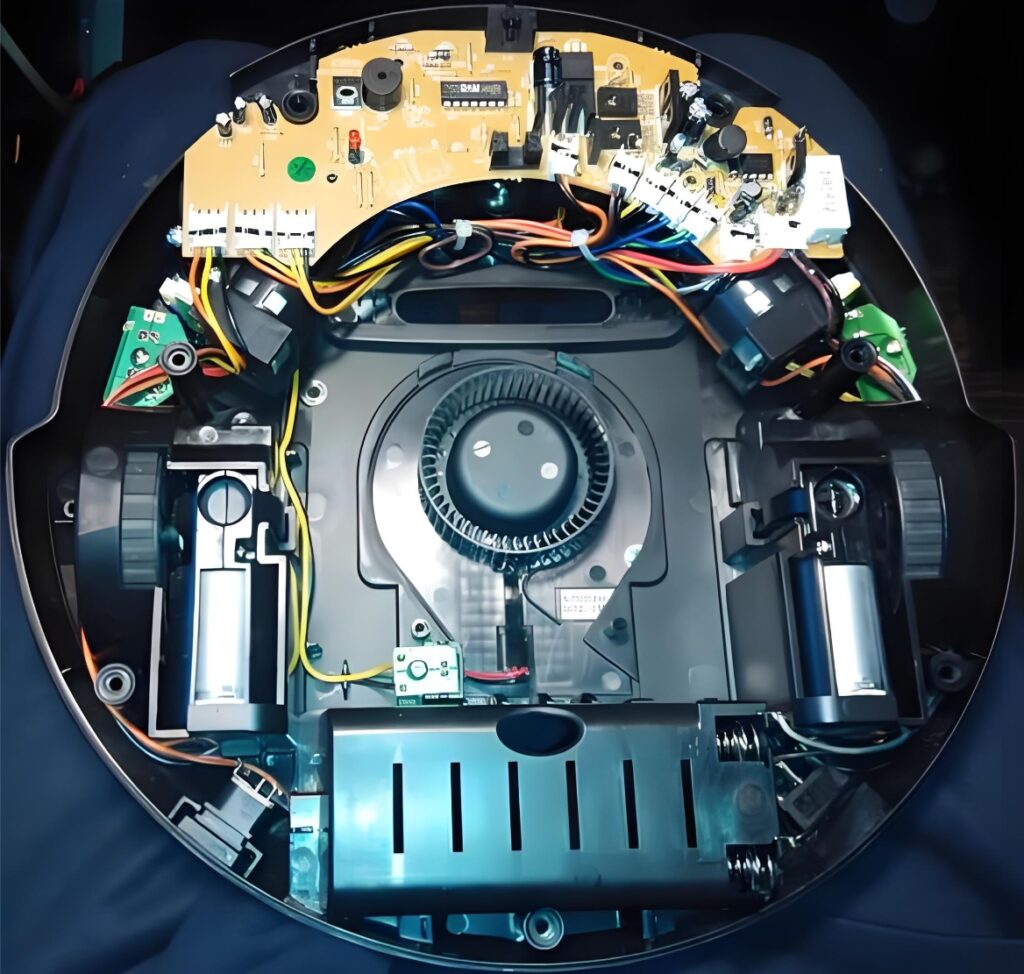
Core Logic: Check if the chassis adopts a split design (laser radar, drive wheels, and water pump system are independent).
Business Value: For B2B clients, this allows you to transform the traditional “whole-machine return” after-sales model into a “part delivery + video guidance” model. Shortening after-sales response time from 14 days to 24 hours is your absolute trump card to defeat any local competitor.
3. Differentiated Premiums Compliant with ESG Standards
In high-end markets such as Europe and the United States, pure intelligence is no longer enough to support a premium.
Long-Tail Strategy: Focus on “low-noise sleep mode,” “proportion of environmentally recyclable materials,” and “pet-friendly anti-tangling patents.”
Business Value: Meet the procurement intentions of high-net-worth smart cleaning appliance buyers. These details are not for easier sales—they help you avoid Amazon’s $20 low-price meat grinder and directly enter the premium segment above $500.
📊 Top B2B Procurement Officer FAQ: Decision-Making Models Under Rational Game
- Q: Faced with channel monopolies by major brands (such as Roborock, iRobot), how can medium-sized wholesalers survive? A: A misplaced competition strategy. Major brands pursue versatility, while you can dig deep into “specific vertical scenario solutions” (for example: high-frequency vibration mopping machines for Southeast Asian tile floors, or ultrasonic recognition technology for North American large flat long-pile carpets). Use differentiated smart robot vacuum sources to establish local monopolies in niche segments.
- Q: How to avoid “stockout risks” caused by chip price increases or supply chain fluctuations in contracts? A: Establish a “key component reserve agreement.” Excellent suppliers will reserve 3-6 months of key semiconductor inventory for core B2B partners. If your supplier cannot provide such guarantees, your business growth will always be at the mercy of others.
- Q: How can cross-border sellers identify whether a factory has real R&D capabilities? A: Don’t look at the production line—look at the test laboratory. A truly top-tier factory must have: a simulated home environment laboratory, a 50,000-hour lifespan tester, and a drop test tower. If a supplier cannot demonstrate real-time iteration records of its product’s obstacle avoidance and escape algorithms, it is essentially just an assembly plant.
🚀 Closing Hook: Restructure Your Global Supply Chain Map
In this era where “software defines hardware,” mediocre inventory is a liability.
Are you looking for a manufacturer that only sells goods to you, or a technical ally that can provide you with a “worry-free profit solution”?
Want to know how to customize a Robot Vacuum Access Technology and Patent Risk Assessment Report for your target market (such as North America, the EU, or the Middle East)?
We can assist you in sorting out global patent barriers to ensure your brand is free from infringement claims during expansion.